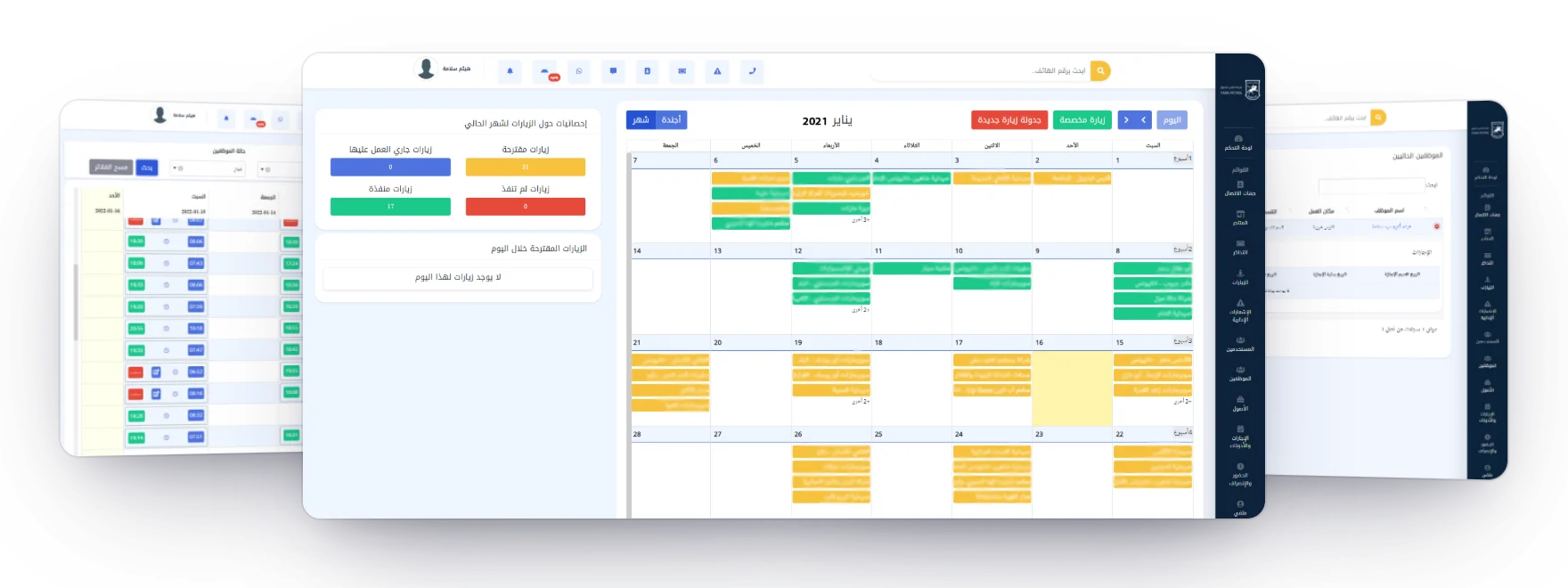
Faris Petrol issues Faris electronic cards and runs Clever, a loyalty app with partner stores. I joined in 2019 as a full-stack developer, and from September 2020 I built, with one other developer, the system its customer service, field and HR teams work in. One side is a CRM linked to the phone system and Clever; the other is HR, with attendance read from the company’s access-control devices.
The month's store visits in front, with the attendance sheet and the employees beside it. The teams needed one place for their daily work, and HR needed attendance it could rely on.
Calls without context. A call reached an agent as a bare phone number.Work spread across systems. Requests had no owner, store visits had no plan, and partner stores lived in Clever.Punches, not shifts. The devices recorded punches, but HR needed shifts, including 24-hour shifts across midnight.Before and after the CRM Before phone system: a number old CRM: contacts Clever: stores, balances devices: raw punches each answer meant another system, and punches were not yet shifts Now one system CRM HR Contacts Calls Tickets Visits Stores Messages Employees Shifts Leave Attendance Phone system Clever SMS and messaging apps Access-control devices one record per customer and per employee, fed by the systems around it One record per customer and per employee, fed by the systems around it. The caller on screen. The phone system asks the CRM who is calling, and every call is logged on the caller’s record.
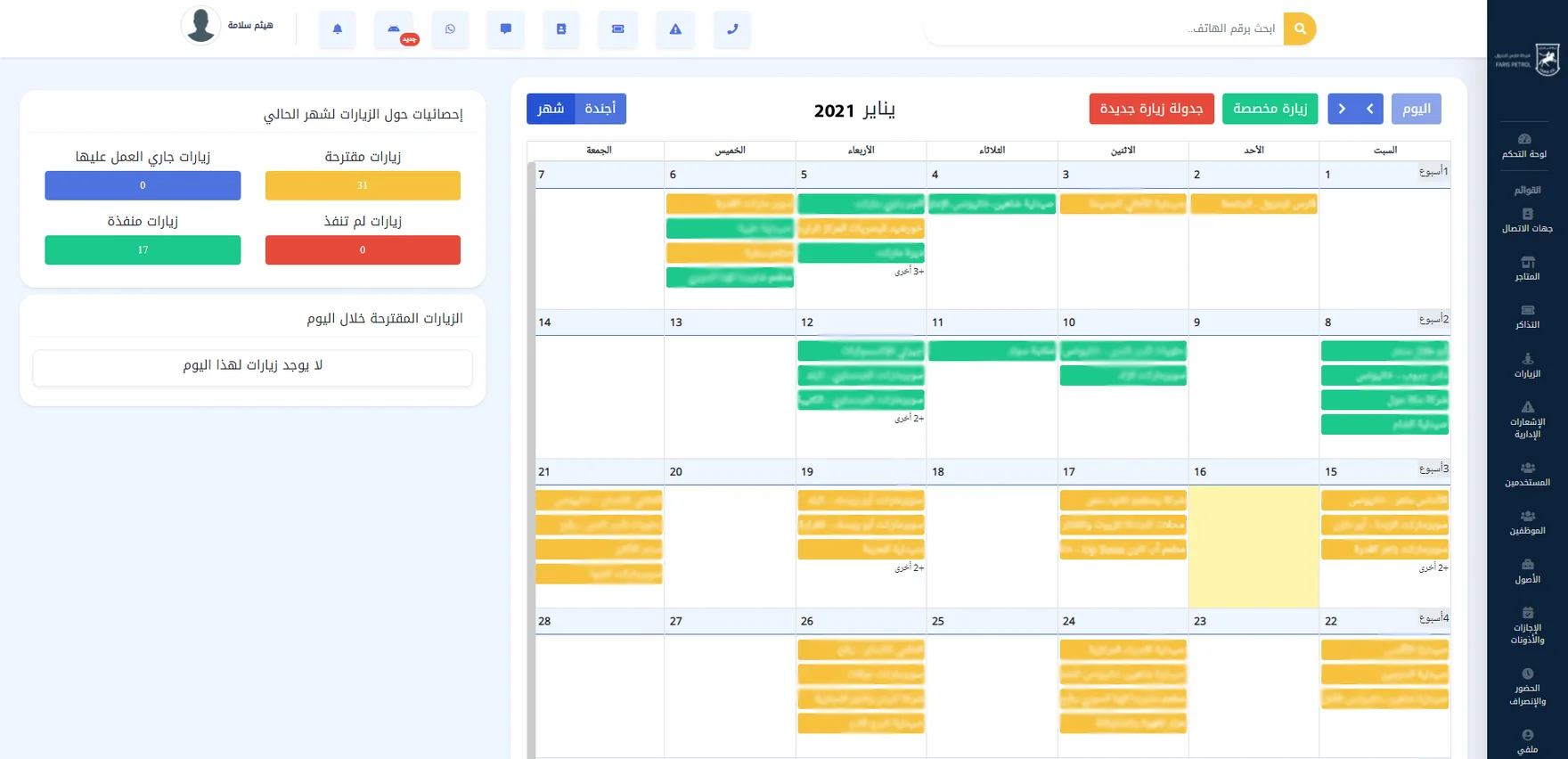
One place for the daily work. Tickets have an owner, partner stores sync from Clever, and every store gets a monthly visit.
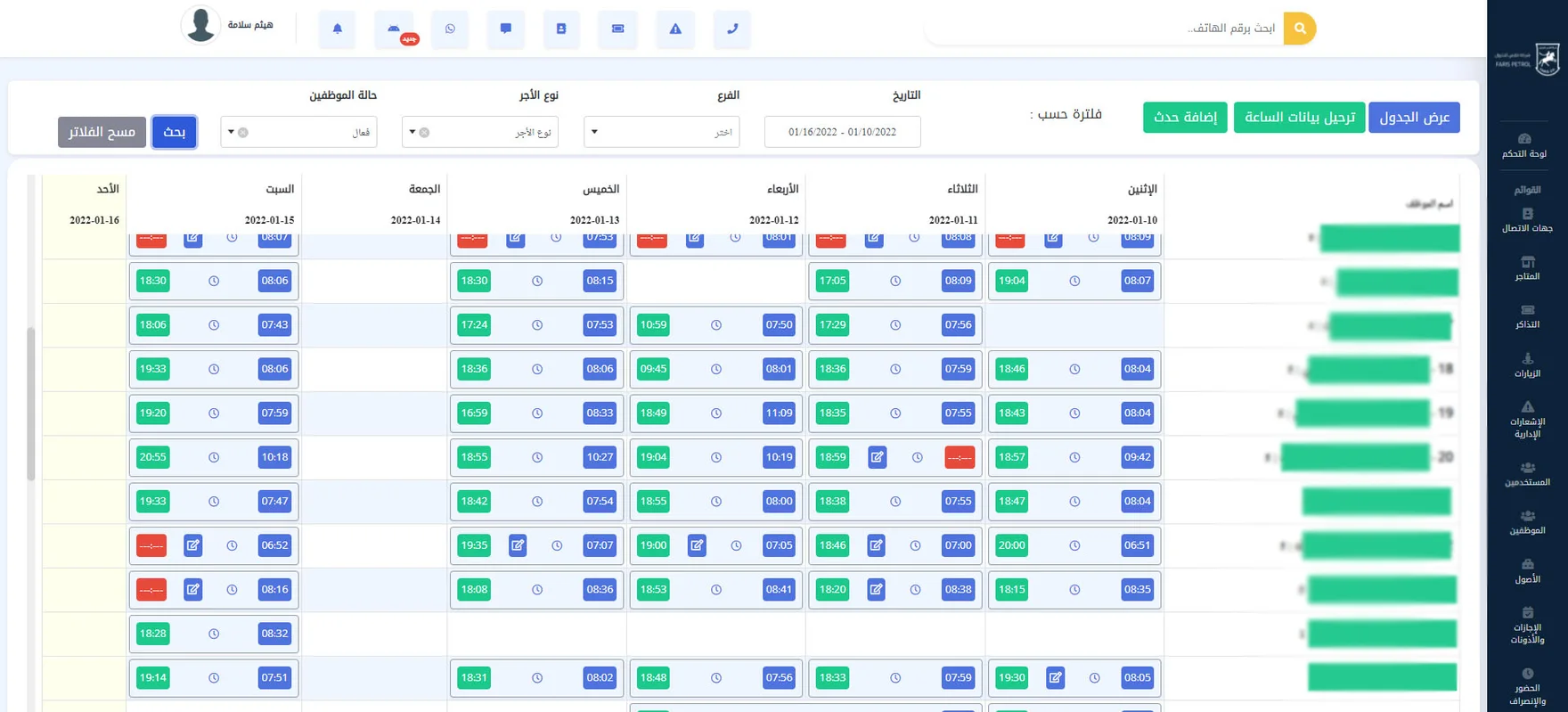
Shifts from punches. One rule pairs punches into shifts, and HR can fix a missed punch or re-run a day.
Set up the project and built it with one other developer, releasing it a module at a time. Built the HR side: employees, contracts, shifts, leave and attendance from the access-control devices. Built the phone-system integration that shows the caller and logs every call. Built SMS templates, the monthly visit plans, and the scheduled Clever sync with low-balance alerts. Built contacts, tickets, visits and messaging with the other developer, and set up roles and permissions. Everything in the system CRM customer service and the field team Contacts cards, notes, tickets and calls Calls the caller on screen, every call logged Tickets an owner, a priority and reminders Partner stores synced from Clever, low-balance alerts Visit plans a monthly visit to every active store Messages SMS from templates, WhatsApp in bulk HR HR and managers Employees imported from spreadsheets Contracts type, pay and dates Shifts day shifts and 24-hour shifts Leave & holidays by type, for each employee Attendance punches from the access-control devices Reports hours worked, leave and holidays both sides share Notifications, in the system and team chat Roles and permissions: who sees what The CRM and HR sides, and what they share. CRM & HR at a glance Agents Field team HR Managers one web system · roles decide who sees what CRM Contacts Calls Tickets Visits Stores Messages HR Employees Contracts Shifts Leave Holidays Attendance Notifications: in the system and team chat Phone system shows the caller, logs every call Clever partner stores, branches, balances, customers Messaging SMS, WhatsApp and Telegram Access-control devices the people on each device and their punches Database Queues & schedules syncs Clever, sends messages, imports and pairs punches One system for every team, with the outside systems feeding it. Roles decide what each person sees, from station supervisors to the field team and HR. Queues and schedules do the slow work, so nobody waits on screen for a sync or a message to send.
Calls and contacts When a call comes in Customer Phone system CRM: who is this number? known: the agent opens their record and calls unknown: the number is kept for later When the call ends Phone system reports it Call log: in, out or missed logged on the contact, with agent and times The agent knows who is calling before answering. An unknown number is kept, so an agent can link it to a contact later.
From punches to shifts Access-control devices each person on a device is linked to an employee Import the punches pulled for a period and kept raw Pair them into shifts the shift says when it starts, ends and on which day Attendance HR fixes a missed punch, or re-runs a day after an outage Reports hours worked, leave and holidays One rule, for a day shift and a 24-hour shift day 1 day 2 midnight day shift in out one shift 24-hour shift in out one shift, across midnight A day shift and a 24-hour shift go through the same rule. Each employee’s shift tells the rule when it starts and on which day it ends. After a power or network outage, HR re-runs the period.
The monthly visit plan, with completed visits in green. A week of attendance, with missing punches in red for HR to fix.